
Designing a dining area often feels simple at first. It’s just a table and chairs, right? But once you actually start planning, questions pop up quickly. How big should the table be? Where should the dining area sit in relation to the kitchen? What lighting works best? And how do you make the space look good without making it feel Clustered?
This confusion is very common, especially for villa owners, apartment owners, and first-time homeowners. Dining room interior design lies between function and emotion. It’s where families eat together and everyday moments turn into memories. Yet many homes end up with dining spaces that looks good in photos but don’t work well in daily life.
The good news is that designing a dining area doesn’t have to be complicated. Once you understand the basics of layout, workflow, lighting, and proportions, everything starts to fall into place. This article breaks down dining area interior design in a simple, practical way, helping you plan a space that feels comfortable, connected to your kitchen, and easy to live with.
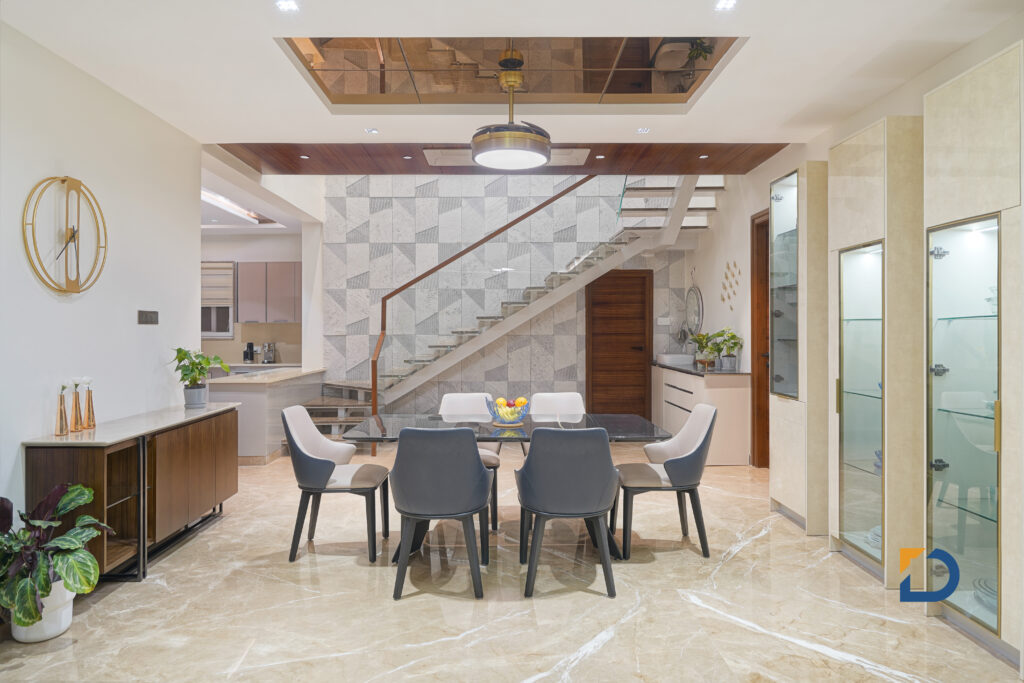
Why Dining Room Interior Design Deserves More Attention
The dining area is one of the most used spaces in a home, even if it doesn’t always get the spotlight. It’s not just for formal meals. It’s where kids do homework, where morning coffee happens, and where conversations stretch late into the night.
Good dining area interior design focuses on three key things:
- Comfort for daily use.
- Smooth movement between kitchen and the dining.
- A welcoming atmosphere for family and guests.
When these elements are missing, the dining area often feels awkward when Chairs feel clustered, Bad lighting, or the space feels disconnected from the rest of the home.
Designing it right from the start saves you from long-term frustration.
Understanding the Connection Between Kitchen and Dining Area
One of the biggest mistakes homeowners make is treating the dining room as a separate space with no relationship to the kitchen. In reality, these two areas work best when designed together.
Think about your daily routine. Food is prepared in the kitchen, served in the dining area, and then cleared back. A good layout supports this natural flow.
Here are a few practical points to keep in mind:
- The dining area should be easily accessible from the kitchen.
- There should be enough walking space between kitchen counters and the dining chairs.
- Open or semi-open layouts often work best for modern homes.
Choosing the Right Dining Table Size and Shape
The dining table is the heart of dining area. Choosing the wrong size is one of the most common issues homeowners face.
Before picking a table, consider:
- The size of your dining area.
- Number of people who use it daily.
- Extra seating needed for guests.
Some simple guidelines:
- Rectangular tables work well for longer spaces.
- Round tables are great for smaller areas and easy conversations.
- Leave at least three feet of space around the table for movement.
Dining Chairs That Balance Comfort and Style
Dining chairs are often chosen for looks alone, but comfort matters more than you think. If people can’t sit comfortably for a full meal, the space won’t be used the way it should.
Look for chairs that:
- Have proper back support.
- Are proportional to the table height.
- Are easy to move without scraping floors.
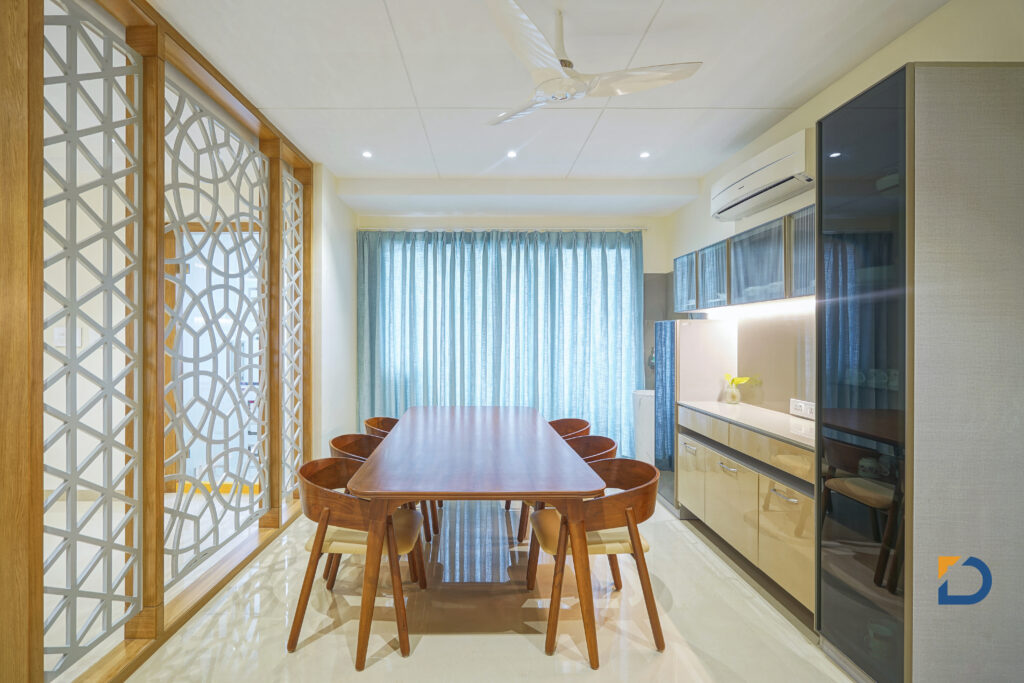
Lighting That Sets the Mood and Supports Function
Lighting plays a huge role in how your dining area feels. Poor lighting can make even a well-designed space feel dull or uncomfortable.
A layered lighting approach works best:
- A pendant or chandelier above the dining table for focus.
- Soft ambient lighting around the space.
- Warm light tones for a relaxed atmosphere
The height of the light fixture matters too. It should sit low enough to create intimacy but high enough not to block views across the table.
Good lighting connects the dining area visually with the rest of the home, especially in open layouts.
Materials and Finishes That Make Dining Areas Practical
Dining spaces need materials that can handle daily use. Spills, heat, and regular cleaning are part of everyday life.
When planning dining room interior design, choose:
- Durable table surfaces like solid wood, engineered wood, or stone.
- Easy-to-clean wall finishes near dining areas.
- Flooring that handles chair movement without damage.
Neutral colors with subtle textures age better than overly trendy finishes. You can always add personality through decor rather than permanent materials.
Using Decor to Personalize the Dining Space
Decor is where your personality really comes into play. This is where the dining area starts to feel like your home, not a showroom.
Simple decor ideas include:
- A statement wall with art or subtle paneling
- A mirror to visually expand smaller dining spaces.
- Table centerpieces that can be easily moved.
Avoid overcrowding. Dining areas look best when decor supports the space instead of overwhelming it.
Storage and Practical Add-ons That Make Life Easier
Storage is often overlooked in dining room interior design, but it makes a big difference.
Consider adding:
- A sideboard for crockery and serving items.
- Built-in cabinets for compact apartments.
- Open shelves for frequently used items.
Smart storage keeps the dining area clutter-free and functional, especially during gatherings.
Common Dining Room Design Mistakes to Avoid
Learning what not to do is just as important as knowing what works.
Some common mistakes include:
- Choosing oversized furniture for small spaces.
- Ignoring circulation space around the table.
- Using harsh lighting that feels uncomfortable.
- Designing dining without considering kitchen workflow
Avoiding these helps create a dining space that works long-term.
How Professional Guidance Helps Tie Everything Together
While many homeowners have good ideas, turning them into a cohesive dining room interior design requires planning and experience. This is where interior and architecture services come in.
A professional approach looks at:
- Layout planning based on real usage.
- Material selection that fits your budget.
- Design consistency across kitchen and dining areas
Designeu focuses on designing spaces that are practical, comfortable, and aligned with how people actually live, from concept to execution, without unnecessary complexity.

How Designeu Helps You Bring Dining Room Interior Design Ideas to Life
Good dining room interior design starts with understanding how a space is actually used every day. At Designeu, the process begins by learning about your lifestyle, family routines, and how your kitchen and dining area function together. This helps shape a design that feels natural, comfortable, and easy to live with.
From layout planning to material selection and execution, every step is handled with clarity and balance. The focus stays on creating a dining space that looks refined while still supporting smooth movement, proper lighting, and long-term comfort. With thoughtful design decisions and practical execution, Designeu helps turn dining room interior design ideas into spaces that truly work for your home and your everyday life.
Final Thoughts
Dining room interior design is more than just choosing furniture or lighting. It’s about creating a space where meals feel comfortable and conversations flow naturally.
A strong connection between the kitchen and dining area makes daily routines easier. Good layout planning helps movement feel smooth and stress-free.
Comfort matters more than appearance alone. The right furniture size, proper spacing, and warm lighting make the dining area inviting for everyday use.
When design is planned around real lifestyles and habits, the dining space feels balanced, practical, and enjoyable for years to come.